Sunday, August 2, 2015

Guest Post: From Coast to Coast

I want to preface this amazing post written by my dad by thanking my parents and Joe from the bottom of my heart for coming halfway across the world to visit me, and by thanking everyone else at home for the limitless love and support they have always given me. 

In Pulaar when you are overwhelmed by happiness and emotion, you say berndam buubi or "my heart is cold." Opposite from the western meaning of a cold heart, in a scorching place like Senegal a cold heart is a happy one, relieved from heat or hardship by the goodness and kindness of others. It made my heart so happy to have my family come visit me this past February, and I am happy to share their perspective here. 

-------------------------------
"You can't believe that two places like home and here exist on the same planet" my daughter said during one of our skype sessions. I initially had no intention of going to Senegal. It scared me. Not the landscape or that I would be living out of a backpack - I actually thrive on that kind of spartan travel. It was more my own social anxiety mixed with the strangeness of the people and culture. I thought it would be better to visit her by meeting in Europe somewhere. But then she made another off hand remark a few months later, which I doubt she even remembers: "its difficult to talk to anyone from the US about my experiences here without having them having seen it". And that did it for me. 

Reading and looking at pictures let's you see the ripples in the water, but not what caused the splash. I had no frame of reference for Senegal. I wanted to see what caused the splash. I became more excited about it as I let myself release control. I could not speak any of the several languages spoken there, so I put myself, Meg, and Joe in Emily's hands and let us go wherever we would go and do whatever we would do. Now, ten days is not two years (and two years is not a lifetime) so my descriptions are going to be one of the smaller, outer ripples of the place. If you want to get a better sense of it, then read the rest of my daughter's blog (it is really good) or go visit yourself and get out of the tourist area.

Senegal is a mixture of beauty and ugliness. When most people show off their vacation pictures they are usually beautiful, breathtaking places: resorts, mountains, beaches, lakes, and forests, with luxuries meals and exotic drinks. Senegal's landscape, at best, has a hard, stark beauty and is often just plain ugly. I loved the strangeness of it. The beauty I found in Senegal ironically lies in the thing that I anticipated would make me most uneasy: their people and their culture. 

Emily had us criss-crossing the country going from the cities to remote villages to the resorts. The sand dunes had some height to them, but for the most part Senegal is flat as a pancake. I think the biggest change in elevation (apart from the sand dunes) was when we hit one of the deep potholes that plagues their roads.

We landed and spent a day in Dakar, the largest city in West Africa. It felt like it was right out of a movie. People, cars, push carts, street vendors all crowded the streets with the occasional Muslim hymn blasting from some speakers. The infrequent stop signs and lights meant nothing. When leaving for the airport at the end of the trip people would be running across the highway in the dark. In one of our drives, a single long-horned cattle walked right through a busy rotary. 

Standing in stark contrast to their surroundings was the beauty of the people, both physical and in their demeanor. Of course you can't generalize to everyone, but many Senegalese are tall and lean, their faces have beautiful symmetry and bone structure. Tall, graceful women capable of being fashion models, seemed to walking down every other street in Dakar. They wore vibrant, brightly colored, beautiful full length dresses. Making it even more striking, the landscape itself was devoid of color, causing the vibrant color of the dresses to just pop. Once outside of Dakar the women in these beautiful dresses would be walking by garbage filled roadsides. Not just a little garbage - I mean completely covered so you'd have to dig to see the ground. The garbage lessened when outside of the more populated areas, but then would give way to droppings in the outer villages (cue Jeff Goldbloom in 'Jurassic Park', "droppings? did you say droppings?").

The beauty was more than their physical appearance. The people there were so friendly, social, happy, joking, teasing, frequently arguing, and helpful. I like to follow my old soccer team at Boston university, and of special interest to me, given that Emily was stationed in Senegal, was a BU player from Senegal named Dominique Badji (even more interesting was that he came to America with the help of a Peace Corps volunteer). 
From the article [http://www.bu.edu/today/2011/soccer-via-senegal/#]: “The biggest thing I noticed was that no one here [America] looks at each other,” says Badji. “In Africa, we said hi to everyone walking down the street. We stopped and talked. We at least smiled. When I came to the States, there was none of that. People don’t look at you when you’re walking right next to them. That struck me right away. It was a hard thing to adjust to.”

Which is what struck me as well in the opposite way. We would take a car several hours to another town, where the dominant language might change, and yet they all acted like they knew one another. When our car broke down late at night in a small town on the way to Lompoul my first thought was "how lucky that he broke down right where he knew someone. Of course he didn't know anyone. I could understand none of what was being said, but I imagined it went something like this (imagine many  people talking at once): 

"hey, my car is smoking, I'm taking back to that garage back there. These people want to go to Lompoul"
"anyone here speak Wolof?"
"yeah, they want to go to Lompoul"
"who knows where Lompoul is?"
"I do"
"Me too"
"Frank has a car"
"Bob and his friends need a ride"
"Me too"
"Who's driving"
"Ralph"
"I found them so I get some of the money"
"Me too"
"Me too"
"Me too"

At which point the bargaining would begin, both with Emily, and between themselves. Eventually when Ralph is ready, Bob and his friends jump on the roof of the car (you can see their sandaled feet outside the windows) and we take off. On the way someone slaps the car, hops off as the car slows, slaps the car twice again, and the car takes off again.

Bargaining took place all the time for the taxis and car rides. I think everyone knows what the fare is eventually going to be, but you have to haggle anyway. Again, I have no idea what they are saying, but it looks like they act offended, threaten to walk away, protest, refuse, maybe toss an insult or two, and eventually end up at the normal price and everyone is friends again. I think the garages were my second favorite experience while there. We would often be spotted walking into a garage, where spotters (often more than one) would lead us to a vehicle (often of questionable functionality) that was surrounded and blocked in by other cars (of even more questionable functionality) with no way to drive out. As we walked we would attract women and children selling oranges, peanuts, bags of water, and other stuff. The person leading us would also attract other men who seemed to have no real purpose for being there. We would then talk to someone to haggle over the price, and when we paid there would be another whole round of bargaining between the "spotter" and the car owner, as well as the other men (for which I now understand why they joined the group) who appeared to me to be saying they helped spot us or lead us.

Emily had been given a Senagalese name by her village family, a sign of respect there. When we were out traveling she would often be asked her name. She would answer Aissata Diallo (pronounced eye-sah-tah jahl-oh), which would chuckles and smiles, followed by trading of insults if they were from separate clans. Greetings, laughter, insults, laughter, arguing, and then everyone piles into the car. 

More arbitrary thoughts. Street vendors selling arbitrary things. We'd drive through a busy intersection where we would have to slow and vendors would walk up to the window selling, literally, parts to a kitchen sink. No exaggeration. I mean they are in your face too. At one point Meg in an attempt to protect me from a street vendor, got in between the street vendor and me with her back to him and her arms raised, like she was halfway to signaling a touchdown. Instead of being angry he burst out laughing and said (translated by Emily) "what? do you think I am ugly?".

Cars are everywhere in Dakar, and Senegal is an automobile's afterlife. When cars die they go to Senegal. Actually I don't know whether they just keep them longer or buy junkers from Europe, but I had to admire their skill as mechanics to keep these things moving with little resources to work with. I also admired their skill as drivers since there are really few rules to driving. The city streets are often reduced to one lane from the people and carts, but then they magically expand with a quick beep of the horn (albeit slowly) to allow cars to pass. The horns also have a language of their own. In the U.S. the horns are usually used to express anger or impatience - long obnoxious and loud. In Senegal there horns are quick toy-like beeps, indicating anything from "watch out I'm coming", "sorry I can't pick you up", to "hey, how are you doing?".

Even outside the city on the long stretches of roads driving is an adventure because of the potholes. The drivers are especially careful of hitting potholes since a bent rim and flat tire can be disaster to their livelihood. So you swerve all the time, as do the occasional oncoming trucks and cars, all in this intricate little dance. Drivers would often drive half in the dirt or all in the dirt completely off the road, sometimes just leaving the road altogether to drive through the desert. It was pretty entertaining for a long car ride. 

It is a little disturbing that over half the cars we were in had cracked windshields. And not the little nicks a pebble would cause, they were completely cracked, like someone dropped a goat on them. I use goats as an example because they are almost as prevalent as the cars - more so in the outlying towns. 

As cool as the dunes were, and as nice as Toubacouta was, my favorite part of the trip was Katote, Emily's village. Emily organized the trip beautifully: a day in Dakar to decompress, a trip to Thies where she had some meetings at the PC training center, the resort and sand dunes at Lompoul (Joe's favorite), with the nicest resort in Toubacouta at the end. Nestled in between Lompoul and Toubacouta was the visit to Katote. It started with the long trip to Ourossogui (in a car with a cracked windshield). The next day we took a van, or maybe it was a small bus. Hard to tell with so many different parts welded together - kind of Frankenstein vanbus. Anyway I counted 25 people stuffed into the vanbus. Plus luggage. In the road side town Emily was heartily greeted, and we picked up a charrette (horse drawn carriage - not the romantic Central Park kind), for another half hour ride to the village. I can't describe it and do it justice. It was dry, sunny, dusty, and hot. By now the garbage had all disappeared but was replaced with goat droppings, but not the disgusting smelly things that stick to your shoes  - they had dried into pebbles. Everything dries instantly. 

Later in the trip when we stayed in the last and most luxurious resort, they offered excursions to "villages". I tend to think these places had lost their innocence with tourists tramping through them, maybe turning into something more like a Sturbridge Village in the states. Katote was different because it was still unspoiled. We were still something pretty special there. Emily had said when she first got there two years ago some of the children cried when they saw her because they had never seen a white person before. The village elders came and sat with me, and they killed chickens for our meal (a great honor according to Emily). One of my favorite times was when Emily showed me how to get water from the well, and I started to fill several buckets, first with Emily and then with Meg. At one point we went too fast and a bucket spilled all over me, much to the delight of the kids around the well. I then carried one of the big buckets of water on my head. The women of the village, Emily included, can carry these large buckets without using their hands - I had to cheat and use my hands to keep it from falling off of my head. As I was walking back the kids started to clap and march in unison. One of Emily's aunts came over to chide her for letting me do women's work. As I rounded the corner back towards the house, I was greeted by one of the village elders who, in an interesting turnaround, was taking my picture with a vintage old camera. I then noticed that all of the village elders were gathered to sit with me. Taken aback, I sat down and mumbled a couple of things which Emily "translated". Don't know what she said, but apparently I am very eloquent. 

Another observation: outsiders that are visiting all seem to become experts on the problems and what they would fix if they had the chance (ok me too, I have this really great idea for a subterranean greenhouse - maybe for another post - Emily willing). I am not so sure that there is as much broken as one might think at first glance. There are things that need improvement: better nutrition, health care, and women's rights come to mind, but I also think about the mounds of garbage in the more "advanced" towns. Its all plastic. Maybe decades ago before the introduction from the West, the garbage would biodegrade, and garbage collection and disposal was not as necessary. Now, without that infrastructure and with the introduction of manufactured and packaged goods the garbage becomes an unsightly byproduct.

Even more pertinent - I saw happiness. Most people know that money and possessions won't make you happy. Good health, family, and friends are a great starting point. One thing that my family often talks about is getting together with cousins, siblings, and grandparents. We look forward to big family gatherings in Vermont and Beach Haven. We dream about having a family compound someday. And yet, in Katote that's what the kids have. They are running around and playing with their cousins all the time. Its a really big family compound. They need health care. They need food. But they also sure seemed happy to me.

A good part of the time we spent in village was roaming around greeting people (see Emily's blog post about this). Not knowing the language gives a different perspective in process, maybe like heightened senses coming with the loss of sight. I've thought (but never investigated) that positive or negative thoughts could influence the brain's processing, chemical or electrical, so that the self fulfilling prophecy actually has a physiological basis. I've often complained that small talk was a waste of time and didn't like engaging in it. I know you are supposed to ask someone how their day is, or their weekend was, or (the worst) how their vacation was, but usually I don't really care for the answer. The constant greetings in the village seemed at first to be useless small talk to the extreme, since it fell in such a narrow range of patterns. But now I think these constant positive greetings might actually make everyone happier.

And I see it in Meg. She may have been the only person I felt immediately comfortable talking to when I was younger. One of the things I've always said about Meg is that while I treat people as strangers until they prove to be friends, she treats people as friends until they prove to be strangers. I watch people light up around her. She actually really wants to know about their vacations. She'll know more about a person she will have stood next to in a grocery line than I will know about someone I have known for two years ("really? You stood next to her five minutes and she told you THAT?"). And Senegal seems to be filled with Megs.

It was cold when I got back from Senegal. While taking out cash in a small ATM vestibule I invited a stranger in to get out of the cold and got a smile and thanks. When leaving I told a woman to watch out for the ice that was in front of the door and got a thank you and a smile. Later walking to work I sneezed and got a "God bless you" and said thank you. I felt happy that day. Who knows, maybe I'll even ask a co-worker how their day is going, or how their vacation to Florida even was when I pretty much know what the answer is going to be. Probably should take this slow though.

Cheers friends,

-Bill Mepham, 2015

Wednesday, March 18, 2015

Finding Home

It has been a full two years to the day since I left snowy New England for my new desert life. Maybe you didn't even notice those two years going by. Maybe you know you changed immensely during those two years, like I did. Maybe you're somewhere in between and you think, maybe it was a big two years, but you haven't had a chance to sit down and really measure the difference. Two years. Seven hundred and thirty days.

Two years is a long time.

I have built a life here. I have my favorite sheets at the regional apartment. I know the best spots to get cell reception in my room. I have a very particular way of setting up my bug net every night. I can tell the specific cry of each child in my neighborhood. I can navigate Peace Corps bureaucracy with surprising skill. I know which constellations will be strung up above my bed at different times of the year. I know which types of clouds will make the best sunrises as they come over the mosque in the morning.

I have come to love this country. I love my family here, I love my village, I love the Pulaar people, and I love Senegal. Even in the face of the colossal homesickness I have felt here, the loneliness and other personal challenges, I am happy. I walk down the streets and I smile because I have found the peace, or jamm, that infuses Senegalese culture. I hope I will take it with me wherever I go.

When I wrote this post a month ago- when the words started to write themselves as I reflected back on my service and its impending end- I finished this top section and went on to talk about finding my way in the world and going back to America. In between then and now, a lot has changed. I went to my Close of Service Conference and I realized, I can't leave here. I'm not done here yet. It was a heart-stopping, adrenaline-rushing, feel-it-in-your-soul realization. It was the kind of feeling that can turn your world upside down.

So, I signed up for another year of Peace Corps.

I have been searching for some time for an elusive something. I can tell you that it wasn't in my village. Despite the love I have given and received there, despite the laughs, the hard work, the challenges and triumphs, despite the cumulative effect of everyday beauty I have experienced over two years there, I did not belong in Katote. I built a life in Katote, it is true, and I liked my life, but it was not my home. It was not where I was meant to be forever.

For a long time now I have felt this unsettled feeling in Katote, but I have struggled to make sense of this or put it into words. Does it make sense to be loved and be happy somewhere but to not belong there? How is it possible to still feel like you are missing something when you have so much?

Honestly, I still don't have these answers. The best way I can make sense of it is to liken it to the idea of home. Home, to me, isn't just where you grew up or what is familiar to you. Home is a sensation that overwhelms you. It is a cascade of good feelings that signal to you that your soul has found a resting place. You go through the ups and downs of life at home just as you would anywhere else, but when you are home you have the settled peace that comes with knowing you are somehow in the right place. I feel at home on the top of a mountain or anytime I step onto a track. I felt at home the second I got to Brown. I don't know why, I don't know what it is, but I want to find home again.

I will be living in the capital city of Dakar for the next year and plan to return to the states next June. I don't know if I will find my home in Dakar, but I am excited to try. Maybe I'll be ready to leave in a year, maybe I'll be so happy there I'll stay, maybe I'll come back to America, maybe I just sent myself on a globe-trotting trajectory that will last the rest of my life. Two years ago I left the snow and everything I knew and loved and I couldn't be happier.


Sunday, December 21, 2014

All About that Food: Part 1

I have been meaning to write this post for months. I kept writing things in my head only to have no electricity to type it out and no internet to post it. The entries I wanted to write kept building up and I didn't know what to do with them all, but then I realized that they (much like my Peace Corps service in general) were all about food. Thus, in honor of the recent Thanksgiving holiday, this series is all things food from my past three months at site, complete with recipes!
----------------------------------------------------------------------
Tabaski
October 5th

Tabaski is the biggest holiday of the Senegalese year. Called Eid al-Adha elsewhere, it celebrates the day that Abraham was faithful enough to God to kill his firstborn child for Him when he asked, and God rewarded his faith by having him kill a ram instead. It doesn't sound like the happiest situation, but just wait until I talk about the Thanksgiving story later in the series. Anyways, like many holidays, the celebration has taken on a life of its own. Clothes are an incredibly important part of Senegalese culture and being clean and well dressed is essential to be respected in this society. At holiday time, clothes and appearances again take a central place. Young girls and boys all get a new outfit for the day, which in Katote means traditional complets for the girls and new polos and jeans for the boys. For adult men and especially women, the tabaski outfits are downright extravagant. First, women spend the entire week leading up to the event and even before then getting ready for the day. It was all I could do to get my very fashionable young health workers to focus on malaria instead of their dress orders at the end of August. You have to secure a tailor to make your outfit at least a month in advance and many of them work around the clock to get everything done. In the week before, women henna their feet and hands and get their hair braided. Buckets of fake hair, or mess, abound in everyone's yard as it is braided or sewn into people's heads. Even I got into it this year and consented to have my hair braided.


But, back to the food. One thing that has stayed absolutely true to the origins of the Tabaski holiday is the sheep sacrifice. For two months before Tabaski, sheep are shipped all around the country, mostly from the Fuuta where I and most of the herders live, to places where they don't regularly have herds, like Dakar. It makes for an interesting transportation experience and far too many of my clothes smelled like dirty sheep after the travels of our malaria tournee. Sheep meat isn't my favorite but for the past two years Tabaski has fallen during starving season so everyone is very excited for the feast. This year, I took careful notes for a recipe and took a rough timeline of the events:

morning: pull extra water to use for all the extra bathing and cooking
10:30: kill the first ram and start to skin him (a man's job). Peel onions and potatoes (a woman's job). Depending on how many kids you have, start washing them.
11:30: the ram has been skinned and cut down from the tree branch, the blood has been buried. The men move onto the neighbor's house to kill their ram. The kids are washed and dressed in their new clothes and start to roam the streets. Keep peeling your buckets of onions and potatoes and start to chop them. People will be stopping by all morning to greet you with the special Tabaski greetings.
11:35: We have been looking at food all morning and I'm so hungry I'm shaking.
11:45: Put your biggest pot on the fire.
12:30: First meat snack. There is nothing like freshly killed fried meat.
12:55: At the exact moment the cover is taken off the bucket of onions you've been cutting for hours, a soccer ball lands in it. The biggest dirt clumps are removed, the bucket in re-covered and the kids are sent away to play elsewhere.
1:15: Start cooking (see recipe below)
3:00: Shower, perfume yourself, put on your new outfit and gaudy amounts of jewelry and makeup
3:30: Have your first portion of the tabaski meal.
3:50: Your feede, or age group, is finally ready and so you bring a bowl over to the house of one of your feede members. Everyone admires each other's outfits, then peanuts, mint candies and packaged cookies are served and finally you eat. Following the meal is juice and attaya, and you go home. You shower, fold up your fancy clothes, eat some lunch leftovers, and go to sleep.

Tabaski Feast Stew
Ingredients are not provided for this as I imagine you are not cooking an entire ram for 30 people. Just add what looks right. Amounts of spices and the onion/potato/meat ratios vary from cook to cook here anyways.
1. Brown large chunks of meat in oil, remove. 
2. Mix a small amount of the chopped onions with boullion cubes, french mustard, freshly ground pepper, and salt. Pound lightly in your woyru, or pounding vessel (like a large mortar and pestle)
3. Add uncooked onion mixture to hot fried meat. This is your snack while you are cooking, enjoy.
***
1. Mix the rest of the onions with boullion cubes, mustard, vinegar, salt and pepper. Let rest, covered.
2. Salt the cubed potatoes in water. Let sit.
3. Brown meat in oil in a large pot, then add water to fill the pot halfway. Let simmer.
4. After 30 min, add the onions.
5. After 10 min more, add the potatoes.
6. Simmer lightly until potatoes are soft. Everything will be mushed together in a stew-like consistency.
7. Serve and eat communally.


For photos of Tabaski, click here or check out my "photos" tab

All About that Food: Part 2

More food-related news from the past three months...
-------------------------------------------------------------------------------
Hearth Project
November 10-20


Last year I did a hearth project with my counterparts after starving season to address the high number of children "in the yellow," or at least one standard deviation below the acceptable weight for their age. It was a big success and so we decided to do it again this year. For 10 days, 10 women and their children came to my counterpart's house. They were divided into groups and took turns doing the cooking and donating logs for the fire. They and their children then ate the food together and practiced supervised feeding. However, we improved on last year's model this time around. With my better language and understanding of the village, I was able to have more input and was more hands-on, which felt good. This year we gave talks to the women about what healthy foods were, what categories of food they fell into, and what parts of your body they helped through the complet model, a strategy developed by volunteers that relates go, grow and glow foods to the three essential parts of a complet, the traditional ensemble worn by Senegalese women. We also gave talks on preventing and treating diarrhea and I gave one on nebadaye powder, a nutritious and easy to make powder from the leaves of a tree commonly grown in Senegal, complete with samples. I also kept track of the cooking and did my best to compile recipes of the foods we served.

I started to write all the recipes down here, but then decided it was too much. Check out my brand new "recipies" tab on the top of this page!

After the 10 days, all of the children had gained weight. We will continue to track their progress every 15 days for the next two months. Check out the pictures of the project here or in the pictures tab.


All About that Food: Part 3

And even more food!

-----------------------------------
Thanksgiving

I was blessed enough to have not one awesome Thanksgiving this year but TWO. 

The first was with my fellow PCVs at a regional house in Ndioum. Last year, I had one of my best Thanksgivings ever, with buckets of food (no, really, the mashed potatoes and stuffing were in huge buckets), dancing, and lots of laughs. This year was just as great if not better. It made me so happy to have 20 of us volunteers coming together, bringing different family traditions and dishes into a little kitchen in the middle of nowhere and using a one-temperature oven and one-temperature burners to cook some of the best Thanksgiving food I've ever had. It is the communal spirit that every Thanksgiving should be, the reason we have the holiday every year. Maybe being away from home purified the meaning of it for us; abundance is something rarely seen in Senegal, and we rejoiced in having an abundance of all the things we have given up here- speaking English, choices about what to eat, cooking for ourselves, wearing whatever we want, showers, and most importantly, our friends and our food. 


In my almost two years here, I have loved learning about and participating in Senegalese culture, especially holidays. Korite, Tabaski, Tamharit, and even Touba Magal have been a big part of my life here. So, naturally, I've been wanting for a while to give my family here that same gift and show them what an American holiday is like. I decided that Thanksgiving was the perfect holiday to recreate for my Senegalese family. It involves food, a story from America, and didn't conflict with any of their holidays. My friend Lindsay came to visit and help and I bought chickens (an impossibly rare treat in my village), brought cranberry sauce, peas, stuffing and gravy, and made instant mashed potatoes. A week before the "fete Americain" I told the families in my neighborhood that I was planning to cook them American food for the holiday. I printed out a coloring book story about Thanksgiving from the internet, read the story to my siblings and neighbors, and then had them color in the pages and give them back to me. Now, after almost two years here my language skills are fairly good. I can translate from Pulaar to English and back on the fly, I can express most ideas in Pulaar, and I can understand almost anyone. (Exceptions to this include trying to describe skiing and understanding the old men who mumble worse than your sullen teenager.) However, I doubt that the Thanksgiving story really got to my Senegalese family. Have you read a Thanksgiving story recently?

Explaining it to my family went something like: people from England came over on ships to America. England and America are not the same, they are across an ocean from each other. There were other people already there. They were Americans. Yes, they were brown. Yes, the English people are white, and now the majority of Americans are white. But not all Americans, there are Americans of all colors. Yes, there are Black Americans, yes they are real Americans, no, they are not just Africans on vacation. Just trust me, there are lots of different kinds of Americans. But originally it was these brown people. Now, the English people didn't know anything about farming or making food, so the Americans helped them. The brown Americans, not the white English people who would eventually become Americans, yeah. (For better or worse, I glossed over awful violence, terrible diseases, and centuries of racism in the interest of time.) And so they worked together, and they were able to make food and survive. And then the English people said thank you to the Americans and they had a party with lots of food to celebrate. And that is why today we eat lots of food and say thank you. Yeah.

I tried.

But anyways, they got that it was a holiday and it was a holiday for giving thanks. I collected the colored pages from the kids that week and then on the day of the celebration we read the story again in all its colored glory. Then we ate the food, which was prepared mostly by my counterpart and best friend Penda. She did an amazing job, more than I could have ever asked for. We gave out nine bowls of food to friends and neighbors who had come for the fun and I think they actually liked it. Most people ate almost everything (even the cranberry sauce!). I think the stuffing was the least popular, it proabably had too many unfamiliar spices. But, success!

This year, I pulled off making two thanksgiving dinners for about 20 people each and had so much fun doing it. I am thankful to my American family and friends for supporting me from afar, and to my family and friends here for celebrating with me and helping me every day.

For more photos, click here or check out the photos tab at the top!


Sunday, October 26, 2014

International Day of the Girl

The International Day of the Girl was October 11th and to celebrate, SeneGAD (Senegal's Gender and Development Committee) decided to do a country-wide discussion and photo project. In our sites, we asked girls to fill in the sentence "I am..." and we talked to the girls about all the positive attributes they had. I cannot tell you how much fun I had with this. They immediately latched onto the concept and we had a great discussion about who they felt they were, what they wanted for themselves, and how to toppitaade hoore ma or "take care of yourself/your life." The discussion was for them, but their amazing answers are written in English for you all. Enjoy!


The boys wanted to get in on the fun too! 

 (soccer player)

Thursday, October 9, 2014

So You Want to be a Peace Corps Volunteer...

I've been wanting to write this post for quite some time. I have hesitated, because how could I know what it takes to be a Peace Corps volunteer? Just because I am one doesn't mean I am necessarily a good one. Maybe I'm doing it all wrong, who knows. At a year and 7 months, I still question every day what it means to be here and what my purpose is here. However, I have seen a lot of volunteers come and go at this point. Happy volunteers, angry volunteers, productive volunteers, lazy volunteers, disillusioned volunteers, and most people who were a combination of all of the above at any given moment. I've gone through all of these phases as well. I feel qualified at this point to give advice.

Many people may disagree with me on what you need to be good at this job and I would appreciate comments if you have constructive additions. Keep in mind that this is influenced by my country's program, my sector (health), and my region. I think this is an especially poignant time to write this post, as it was the time I considered Peace Corps service, starting my senior year in college. If you are reading this and thinking about applying, I hope it helps.

Forget everything you thought you knew

This is the first rule of joining Peace Corps. I don't care if you were a CEO for 10 years, if you were the smartest kid in your graduating class, if your uncle is the president of UNICEF, or if you started your own NGO in Uganda at 15, this is different. When you arrive here, you are a baby. You know nothing. You can look back to your previous experiences and use them here, sure, but the less preconceived notions you have about your service the better. Some of the volunteers I've known who had the most difficult time with their service were the ones who had dreamed about it since they were 10 and had all sorts of ideas about what Peace Corps was supposed to be. No matter how much you (think) you know about Peace Corps or about volunteering, you don't know it. No matter how much you (think) you know about your country of service, you don't know it. You have to take time to experience it in order to know this place, this thing, and even then you won't know everything. Embrace the fact that you don't know and surrender yourself to learning only.

Get used to being out of your comfort zone

Whether you hate being onstage, you can't handle bugs, you hate kids, you don't take well to boredom, or you feel the need to have direction or clarity or answers, something in your daily Peace Corps life will be a constant challenge. Some things will be more on the discomfort side of things, like being dirty or having bed bugs or getting constant staph infections. For me, these were the easiest things to get over but for others they were daily plagues that bothered them their entire service. Other things will push you mentally, and I think these are the harder things to deal with. I hate being in front of people and talking, and while my job is really to act as the behind-the-scenes motivator of my counterparts, just being different put me 'on a stage' in an uncomfortable way. I have spent 19 months forcing myself to be in the limelight, where my village needed me, far outside my comfort zone. It is incredibly exhausting to live this way. For you the "out of comfort zone" experience may be the persistent doubts that haunt every PCV. It may be homesickness. It may be lack of support from Peace Corps staff, PCVs, your host community, or all three. There will be something in your service that plagues you. Be prepared for this. It will be difficult, it will hurt, but as long as you are prepared and grow to be resilient, you will be okay.

Embrace the cultural exchange

I am going to flat-out say it: if you want to join Peace Corps to do American-style productive work, don't. Just don't. You will be disappointed. Yes, I have had inspiring moments. Yes, I think I have made at least some difference in my community. But securing lasting change is something that takes time, far more time than the two years you have here. The only impact I can be totally sure of is that my community has met a kind American who made an effort to know them and their culture. All other work you do may succeed or may fail, but you will not know going in whether will be successful and you may not know even when you leave. If that is not enough for you, if you will feel defeated if cultural exchange is the only product of your service, do not join.

Learn how to be happy

This job is not easy, and sometimes long stretches of it can be very difficult. The best thing you can do for yourself is to make the decision to be happy. It is absolutely a conscious decision. This includes having a sense of humor about things, making the best of situations, and enjoying the little things while not sweating the small stuff. You will get better at this as you go along. Car breakdowns will be a chance for a nice conversation with your fellow passengers instead of ruining your day. Constant sweat will be you releasing toxins. Sunrises and sunsets and stars will mean more to you than ever, and screaming voices will roll off you more than ever. But it is a choice to go in this direction, to learn in this way. Not everyone makes this choice, not everyone realizes it is a choice or is capable of making it. If you can do it, if you can make every day beautiful in some way, it is one of the greatest skills you will learn here.

At one point, this post in my mind had a list of things that you should be- outgoing, personable, decent with languages, etc. But I don't think I believe in that anymore. I believe successful (however you gauge that) Peace Corps volunteers come in all shapes and sizes, with all backgrounds, skill sets, and reasons for being here. As much as the Peace Corps volunteer can be stereotyped, everyone here is totally unique and even those that are similar will fare differently in their PC experience. If you are totally prepared to forget everything you thought you knew, get used to being out of your comfort zone, embrace the cultural exchange, and learn how to be happy, you will be okay as a Peace Corps Volunteer. It can be a lot harder than it sounds, but it is totally worth it.


Brief Update


Hello Everyone! I feel like if I don't post a small update now I'm bound to get way too far behind in what I am up to, so here it is:

As I mentioned in my last post, I went to America on vacation for the entirety of Ramadan. When I got back to Senegal I was planning on going to Katote right in time for the end of Ramadan celebration, called "Julde Korka" in Pulaar. My plans were tight though, and ended up falling apart. I had only one day where I could have made it back to Matam and there were inexplicably no cars running that day. I was so upset to miss this holiday with my family, but sometimes you have to just accept what the transportation gods give you.

The reason my plans were so tight was because I was asked to be a trainer for the IST or "in service training" for the most recent health stage at Peace Corps' training center in Thies. New health volunteers, coupled with a handful of CED (Community Economic Development) volunteers, come to Senegal in March then finish their PST (Pre-Service Training) in May and are sworn in as full volunteers (the same schedule as I had). Their second training is 2 weeks in August dedicated to more technical first-goal work. It was this that I was asked to help with. Typically volunteers that have completed their 2 year service extend to be PCVLs (Peace Corps Volunteer Leaders- getting sick of the acronyms yet?) and they guide new stages through the training progression. Their jobs are to organize all of the sessions, keep records from past years and for present years, organize the logistics of sessions, bring in guest trainers, preview all sessions, monitor sessions as they are happening, and monitor the overall flow and content of the training, especially putting in a volunteer's perspective. They work with the APCD (Associate Peace Corps Director) and the PTAs (I don't even know what these stand for at this point) as well as the the Director of Programming and Training to put together the training series. The only problem here is that no one from the last group of health volunteers extended their service to stay on as PCVL. APCDs and PTAs are undoubtedly involved with a great deal of training, but with our propensity to organize and our connection to the volunteer experience, much of the work, especially day-to-day as the training happens, is in the hands of the PCVL. For this training, I was "acting PCVL" taking on the duties of a PCVL temporarily. The responsibilities may not sound like all that much, but it kept me working from 7am to 11pm or 1am for 16 days straight. It was a blast. I loved being able to talk to the new volunteers, sharing my experiences and being invigorated through their optimism. I loved speaking English and feeling proficient at something for once. I have always loved the training center, which has been cultivated beautifully by the Agricultural PCVLs and their counterparts and feels like such a beautiful marriage of Senegalese and American culture to me. It was also a nice transition from vacation for me. I went from all the comforts of America to a few days in Dakar, where we have hot showers and most any food you could want, to the training center, which sometimes has warm showers and the best and healthiest Senegalese food. Then I was ready to go back to site, with my bucket showers and rice bowls.

From the Thies training center I went back to my Senegalese home and started on my Malaria tourney with Anna. I'll report on that fully when we're all done. We worked on the first phase for the entire month of September and will do our follow-up in November.

At the end of September I had the fortune of attending our second ever Northern Summit, a two-day event that brought together volunteers from the northernmost 3 regions of Senegal- Matam, St Louis and Louga. The culture and climate of this area is often drastically different than that of the south, where most of our volunteers are placed. The general training we get from Peace Corps can often be south-leaning because of this, or simply not specific enough to our northern needs. The summit sought to address this, encourage information sharing, and highlight the current work of volunteers in the area. It was a great success and I think everyone got a lot out of it. It didn't hurt that it was at a beautiful campement in St Louis.

After that, there was a three day transportation strike (transportation will be the end of me here) and the SeneGAD meeting I had planned to be in Dakar had to be pushed back and condensed. As always it was wonderful to see my fellow board members and the regional representatives, they really are a great group. We only have about 5 months left on the board and have a lot we want to get done before then! Keep your eyes out for a new website, hopefully at the new address of senegad.com, and an exciting International Day of the Girl social media campaign we will be running for the month of October.

In between the Northern Summit and SeneGAD meeting, I applied for a WorldConnect grant for the revitalization of my Health Hut, something I have been working on my entire service. Everything I have been doing up until now has been organizational and based on capacity building, and then in June I wrote a grant for some structural help for my Health Hut, including a shade structure, a wall and paints for murals. The funding source I applied for in June wasn't right for my grant type, but then WorldConnect opened up funding again and I reapplied to their program, staying up half the night for two nights to complete the lengthy application. Cross your fingers that I get the grant!

We also got to slip out to the beach for a day to celebrate Hannah's birthday, a wonderful break from the non-stop work I had been doing since I stepped back into the country.

I headed back to site right in time for Tabaski, the biggest celebration of the year. I can't wait to post about the festivities and give you all the recipe for the Tabaski lunch meal.

Okay, that wasn't exactly brief, sorry.

America the Beautiful

This is a very late post and will have to be a quick one, but I wanted to just thank everyone I got to see and everyone I talked to while I was home. I spent all of Ramadan (end of May to end of June) at home going to New York City, Boston, Sudbury, St Louis, Rochester NY, and Long Beach Island NJ. Some volunteers have a hard time going back to America. The transition can be jarring, the abundance or lifestyle of Americans can be overwhelming. Sometimes people in America can be insensitive to your experience or even rude about the people and places that have become so dear to you. I am so thankful to have kind, sensitive, supportive, intelligent friends and family who have truly taken the time to read what I write here, follow my experience on Facebook, do their own research on Senegal, and ask me great, kind questions. They also listened to my culture shock as I came home ("the streets of Brooklyn are so clean! Oh my goodness, your air conditioning is so fancy!"), went on all the excursions I was set on doing (special thank you to Sarah, my constant partner in crime), were patient through my rambling stories, and took time out of their busy lives to be with me. I truly appreciate the community I have at home, and the love and support I felt from everyone while I was there was overwhelming. It was incredibly hard to leave. This time next year I will be home though, so I needed to come back and make the most of the year (or less) that I have left.


Saturday, August 30, 2014

"Write About Your Peace Corps Experience"

The last two months have been a complete whirlwind. I am in the process of writing a detailed post about everything I've been up to lately but until then I thought I'd share a little piece I wrote recently. I was in the middle of teaching for PST2 (the second training for volunteers that arrived this past March) and my supervisor asked me to write something about my Peace Corps service. Summing up an experience that spans years, every emotion I possess, and a pretty wild series of events is not the easiest thing, but it was actually nice to sit down amid the chaos of training and say a little something about what Peace Corps means to me. I hope you enjoy it. (Some of the stories or imagery may be recycled from other posts I've written, sorry to be repetitive.)


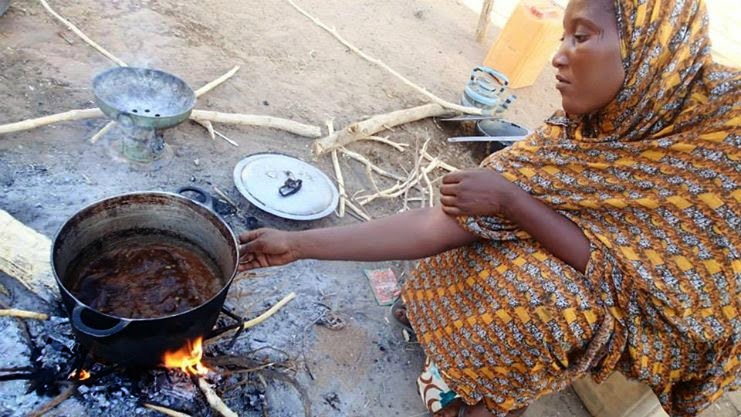
My name is Emily and I am a Peace Corps volunteer living in almost exactly what you might picture the Peace Corps to be. My village is a tiny, beautiful cluster of mud and cement houses in the middle of the desert. Around the village, you can see for miles along the hard packed sand and shimmers of heat. We have no electricity, no running water, no cars, no paved roads, a small mosque, and one elementary school. We wear brightly colored clothes, pull water from a well, and carry babies on our backs. Men drink tea in the passing shade of buildings and women cook over open fires. At night, we sleep outside together under the stars. 

This looks like a Peace Corps poster. I look like a Peace Corps volunteer- fairly dirty, smiling, tan from the African sun. But what does that Peace Corps picture mean, actually? When I sit in village, I do have the presence of mind to appreciate all of the wonderful things in my community. On days when I struggle with the language, on days when my projects look like they are going to fail, on days when I am hot and hungry and lonely, I still see the beauty of a child smiling on my lap or listening to my grandmother tell stories. There are hard parts of this job, and the challenges we face here are not to be taken lightly. You become resilient here or you don’t make it. More than anything else, though, the hardest part of Peace Corps is sitting in village, falling in love with it, and asking yourself, what am I doing here? Am I doing everything I can? Does anything I do make a difference? Am I capable of any of this? I have never cared more about anything and failed so much. The truth is that creating successful, sustainable projects is incredibly difficult and much of a volunteer’s work will not have the desired results. Even if it does work the way it is supposed to, many of those initially successful projects will not outlast the volunteer’s time of service. It is a special form of torture, I believe. To care so much, to try so hard, to fail so often. This is the essence of why being a Peace Corps volunteer is so difficult. 

Sometimes though, you get it right. You find the right counterpart and the two of you go after something you are passionate about to the fullest extent of your capabilities. And with a small miracle, it works. And when something works, it really works. It is worth all the tears, the anxieties, the sleepless nights for this one project, this one moment. 

“Enen njogi dole! Enen njogi dole!” This was the sound of success, this was the sound of change, of capacity building, of making a difference. This- “we have strength! we have strength!”- is what 25 girls chanted and danced to at the end of one of my Girls Skillz* sessions this past May. The memory of it makes me emotional and I hope it always will. It was not an easy road to get to this point. I live in the north of Senegal, a largely rural, very conservative Muslim area. Most young girls don’t make it past middle school or even elementary school and in their parents’ generation many women never attended school at all. Many of them know almost nothing about reproductive or sexual health. Early marriage is very prevalent, with brides as young as 12 or 13 married to over 30 year old men. When my counterpart, Ramata, and I started this project, no one came to our village meeting. Not a single person. We were going to talk about sensitive issues and people were wary of what that meant. The fact that girls were going to play soccer in our program at all was highly unusual, and then we wanted to talk about early marriage, HIV/AIDS, STIs, and women’s empowerment on top of it. Undeterred, we went house to house inviting people and talking to their parents, gaining their trust in the program.

At our first meeting, we had 10 girls show up over an hour late when we had invited 30. The girls were so shy that no one talked and they pulled their scarves over their faces. They smiled at my dance-based activities but only barely participated, giggling nervously at the idea of dancing and chanting in a formal classroom. They didn’t have any suggestions for a team name. I left that first day feeling like Sisyphus. All the work we had put into the curriculum, all the time spent training, and it just was not working. All I could hope was that maybe they secretly enjoyed it and just didn’t show it. Was it me? Had I not put in enough energy, enough preparation? I knew that what we were teaching them was so important and that the program could offer them so much. No one had ever asked these girls what they wanted to be when they grew up. No one had every asked them to consider what makes a good partner. No one had ever told them that they were beautiful inside and out. No one had ever told them that they were strong, that they were smart, that they deserved to be educated and make choices about their lives. 

Ramata and I started preparing for the next session, feeling that even if we only taught one girl it would make a difference and be worth the work. Several days before the next session, girls or their mothers started coming up to me in village. They wanted to be included, they said. They wanted to be part of this special group I had where people were having so much fun and talking about such interesting things. I was shocked but delighted. An hour before our next session was supposed to start, I had five girls come to my house because they wanted to start early. When I got to the classroom, 30 smiling girls were awaiting me and Ramata. They were still shy and still nervous to talk, but they danced wholeheartedly with me and laughed big, happy, beautiful laughs. As Ramata went through the session I could see comprehension dawning in their eyes. They were taking time to think about themselves, about their lives, about respecting their minds and their bodies. They were answering the questions that no one had ever asked them before. By the end of the session, the girls were all snapping their fingers to add their comments and we made up songs about the strength of women. “Enen njogi dole! Enen njogi dole!” It was everything I could have imagined. My face hurt from smiling so much. We had created a space where they could be creative, lively, 13 year old girls. They weren’t brides, they weren’t caretakers, they weren’t burdened by cooking, pulling water, sweeping, washing, or any of the other chores they are constantly tasked with. Over six weeks, what we were doing continued to astound me. The girls were learning about themselves, growing, exploring the possibilities in front of them. I am sure that they won’t forget the things we did and I know for a fact I never will. 

Being a volunteer is not easy. Every single day here is a challenge for me both mentally and physically. But I wouldn’t trade it for the world. No matter what I am giving up to be here, it is nothing compared to what I am doing and what I am getting. When I sit in village, I question myself and my role as a volunteer, but I know that this is the most worthwhile thing I have ever done and may ever do. I’m a lucky volunteer living in a tiny, beautiful cluster of mud and cement houses in the middle of the desert.


*a Grassroot Soccer program

Sunday, August 24, 2014

Better Than the Movies

On June 27th I was flying home to America for my Ramadan vacation and I had a strange sort of experience. I had a comfy seat, good food and a variety of movies to choose from all in front of me. What more could a Peace Corps volunteer want? The odd thing was, I could barely make it through a single movie. I was honestly just bored by them all, which is not a common occurrence for me. And then I realized, it was because my life is actually better than a movie right now. My life is better than a movie. I sound like a total asshat (my new favorite word, courtesy of Azar) for saying that, I know, but it's actually true. And it's the coolest thing. I am at a point in my life where I am really happy- I have great friends, I have adventures, my work is fulfilling and challenging, and I am growing as a person. I am the person I want to be. A person my kid self and my future self could both be proud of. It's a perfect storm of wonderfulness. Life goes in waves and I've certainly had some downs here, but I am on a serious up-swing now and I'm enjoying every minute.

I've done a lot of very cool work-related things recently that I will get into when they are completed, but I've also had the fortune to take on some social and cultural adventures in the past couple months. It's the merging of hard work and exploration that has made me so happy, so here are some of the more colorful (and luxurious) things I've done.

-------------------------------------------------------------------------------------
This June was the annual St. Louis Jazz festival. It was one of the best trips I've taken while in Senegal, which is saying something because I've gone to some great places here. I've always loved St. Louis for a variety of reasons. It's a relatively small city and the touristy section I usually keep to is especially small, just one island. Unlike Dakar, enough people speak Pulaar around St. Louis that I can get around fairly easily without having to do the French-Wolof struggle. Mostly though, it is just really beautiful.


Originally the French capital of Senegal, vestiges of French architecture have remained in St Louis but Senegalese style and culture has grown into the bones left behind. The mix of the two is beautiful and vibrant; just the perfect place to have a jazz festival. Throw in the cool ocean breezes, real coffee, crepes to die for and my favorite ever clothing store (http://www.ramadiawfashion.com/about/) and it's a wonder I ever left. My friends and I got rooms in an auberge a little off the island by the ocean, shopped and ate by day and went to the events at night. It was a rare and special occasion for us all to take hot showers, put on a little makeup and act like real people.

-------------
Before I left for America, I left site a tiny bit early to attend Fashion Week in Dakar with my friends Faith and Emily. Although events were going on all week, I made it in just for the Friday night runway finale.

I have been fascinated by Senegalese and West African fashion since I arrived here, buying way too much fabric and making fun clothes for myself and my friends and family. This, of course, was on another level. We shabby Peace Corps volunteers, dressed to our best, were far outmatched by the gorgeous crowd that came to this event, not to mention the models and collections. At the amazing Hotel des Almadies (which, fun fact, owns the beach that is the westernmost part of Africa) the Dakar fashion elite gathered and we watched collections from all over Africa parade down the runway. Coming straight from village that morning made the event that much more stunning, in all senses of the word. Dakar is truly a different world than the rest of Senegal. As much as part of me lamented that this event, this lifestyle, was unreachable to the vast majority of Senegalese people, I was impressed by the creativity and hard work of the designers and models. Overall, it was a mesmerizing event that I am happy I had the fortune to attend.


-------------
After the fashion show, I visited my friend Lindsay's site and we headed back to Dakar together to go on our vacations, her to Israel and me to America. Before we left, we got to watch some World Cup games, attend a pop-up warehouse party, meet other expats in Dakar, go to brunches, and take more hot showers.

And then I found myself on a plane to America. Smiling, fulfilled, and a little bored by the movies.


Saturday, June 28, 2014

My Life in an Oven

I haven't come up with a unified complete blog post for a while so here are a series of scattered thoughts.


--------------------

Hot season in the Fuuta is upon us, which means scorching sun with an even hotter wind. Its like when you're baking a cake and you open the oven door to pull it out and get that rush of 350° air. Except imagine you also get a face full of blinding sun. And the other air around you is 115-120°. And you can't shut the oven.

--------------------

I've become proud of my sense of smell here. Its a big part of my life, really. You're sitting in your compound, on a horse cart (a charette or saret), or walking to the market. There isn't always all that much to see here in the desert but there is always some smell to identify. I can tell at quite a distance the difference between human poop and animal poop, which is very different from your diarrhea, which is again distinct from a baby's diarrhea. Then there is the more watery smell of sewage, when you're in a place that actually has a sewage system (of sorts). The age of it matters too, as manure is completely different from any of the above smells and so too is the fresh smell of a horse pooping in front of you while it is pulling your charette. But it's not all about poop, not always. There are smells of a freshly powdered baby, mud oven bread baking in the early morning, the lilac-y scent of the bushes surrounding my village when they bloom in February and March. The house-based smells of laundry drying in the sun or simmering beans in my favorite tomato sauce. I can identify the type of wood we are using to cook or the amount of dung tossed into the fire by the smell. An over-perfumed man, often wearing a distinctly feminine scent, can actually be nice to walk by. Anyone who lives here knows the humid, dusty and slightly sweaty scent of an alhum (small bus) full of people. Some smells I can't describe, you'll have to find a better writer. I know the smell of meat in a market or the smell of fish and then dried fish as you turn the corner. A scent that is fairly distinct to the Fuuta is the smell of a dead animal, the strong, acrid, vomit-y smell of its carcass baking in the sun. Garbage fires, with its sickening burnt plastic overtone mixed with a heavier rancid aroma is a standby here. Garbage in Senegal lacks the sickening rotting sweetness of American garbage, probably due to the lack of milk and fruit. There are seasonal smells like ripening mangos or flowering neem. There are weirder smells that you only get to know after a while, like the oddly sweet smell of a person's sweat when they have had a lot of kosam (soured milk drink) recently. The smell of old well water when you've left it in your bucket too long- musty and plastic-y. The dusty smell of my mattress after a windy night outside.

---------------------

You know you're part of the family when your little sister picks your nose for you.

---------------------

I love breakfast stands here. It's like heading to an airport in the states. A heady sense of excitement concealing your underlying tiredness from an early rise; you're going somewhere. Whether it's a 15 hour sept place ride to Kedougou or a plane to California, you are on a trip, and treating yourself to expertly mixed café e meew or Starbucks and a muffin is the beautiful beginning to your journey. You banter with the breakfast lady and the other customers, you people-watch everyone on the automated sidewalk. Now, if you get breakfast from a stand every day or you are at the airport all the time it loses its magic. It stops being the horizon to a new adventure, loses its place as the daybreak oasis between leaving and arriving. If you're lucky though, you realize it for what it is. Breathe, sip, savor, smile.

---------------------

After being in Senegal for over a year, I am dirty. So dirty. Somehow, there is a film of dirt on me that just doesn't come off anymore. I'm being completely serious, honestly not exaggerating and romanticizing the dirty Peace Corps volunteer thing at all here. There is a distinct difference between the new volunteers and old ones. A year of transportation- alhum rides, bush taxis, charettes, walking- plus the constant sweating and a season of dust storms must have something to do with it. From between my toes to the crevices of my ears, I am dirty. And thats just the outside of me. On the inside it's just as bad. I eat almost exclusively refined white sugar, white flour bread, rice and copious amounts of oil. A little fish, some vegetables. Mostly carbs, sugar and oil though. It has got to be rotting me from the inside out, I'm sure. The only thing that has a chance of getting cleaner while I'm a Peace Corps volunteer is my soul I guess.